LSRP and Site Remediation Services
Environmental cleanup requires technical expertise, regulatory knowledge, and careful planning. ESA provides Licensed Site Remediation Professional (LSRP) services and comprehensive site remediation solutions to help clients navigate New Jersey's environmental requirements and achieve regulatory closure.
ENVIRONMENTAL REMEDIATION

Managing Environmental Cleanup from Start to Closure.
ESA provides regulatory management, investigation and remediation oversight, remedial design, construction, and project support. Our experienced environmental professionals and LSRPs work to identify appropriate remedial alternatives and develop solutions that consider both your environmental obligations and project objectives.
NEW JERSEY REGULATORY OVERSIGHT
Service 09: Licensed Site Remediation Professional (LSRP) Services
The NJDEP requires that all remediation projects retain an LSRP. If you are a property owner, municipality, school, or other entity in any way responsible for the cleanup of a contaminated site in New Jersey, it is likely that your project requires an LSRP.
LSRPs provide regulatory management, investigation and remediation oversight, and case closure by issuing a Response Action Outcome (RAO) letter. LSRPs select site remedies and expedite the investigation, remediation, and closure of soil and groundwater cleanups.
There are more than 700 active LSRPs in New Jersey. So, how do you select the right one? Here is some guidance to select the LSRP best suited for your project.
Ask The Right Questions
• What is the LSRP’s area of expertise?
• How many RAOs has the LSRP issued and for what type of projects?
• Does the LSRP utilize their right to exercise professional judgement? Or are they more rigid in their decision-making? ESA believes that LSRPs who exercise professional judgement to assist their clients are often the key to success in achieving regulatory compliance and meeting client’s project goals.
What are the Benefits of Retaining One of ESA’s LSRPs?
• ESA will manage your project on a turnkey basis
• You will save time and money. The duration of your project will be reduced by as much as 50% when compared to NJDEP’s former case management system, and you will pay fewer NJDEP fees versus the former system
• ESA’s LSRPs meet the criteria described above. Of greatest importance, our LSRPs are willing to utilize the tools available within the regulatory framework to advocate for our clients and to render fast and technically compliant project closure.
ENVIRONMENTAL CLEANUP & REMEDIAL DESIGN
Service 10: Site Remediation
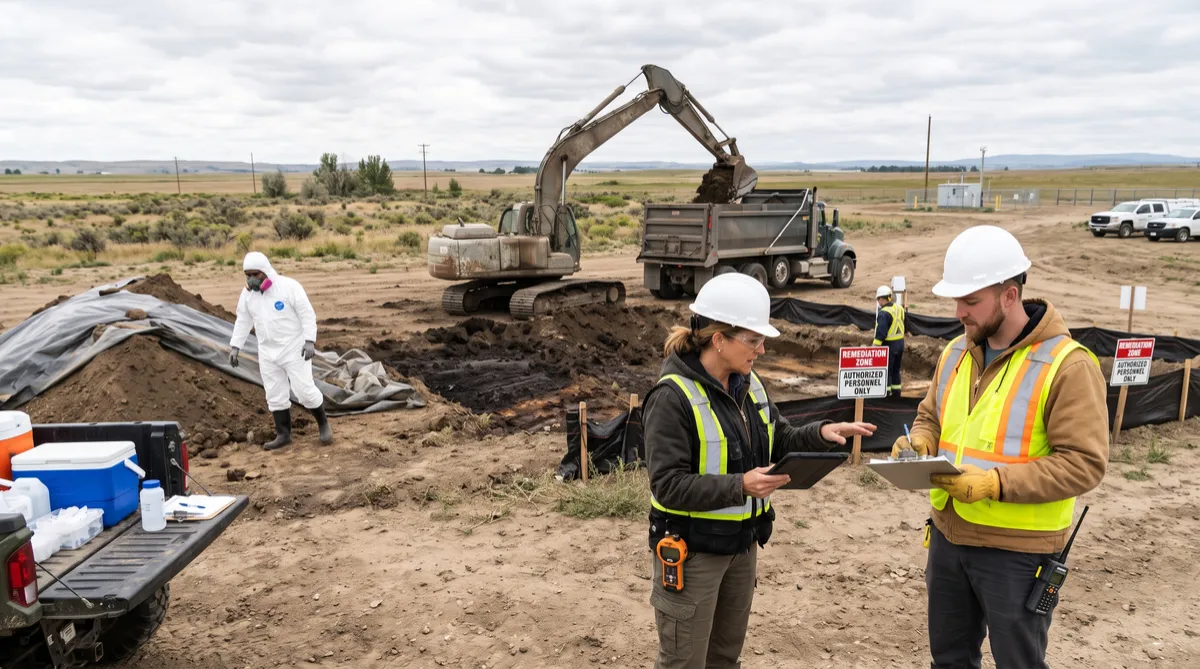
Remediation can be very costly. Therefore, your environmental consultant must understand the cleanup process both administratively and from a hands-on design and implementation perspective. Furthermore, you need a consultant that cares as much about protecting your budget as you do. For nearly 30 years, ESA has established itself as a team of remediation experts who care deeply about the outcome of your project.
In most instances, ESA needs to determine the horizontal and vertical extent of contamination prior to implementing cleanup. Knowing when this investigation can be avoided is in itself a cost-saving mechanism. This forward-thinking nature is what makes ESA’s remedial design services so highly prized.
ESA provides risk management, engineering, design, construction, operation and maintenance, and support for all types of remedial projects. After your site has been sufficiently characterized, select staff analyze the information, combining their understanding of the nature and extent of the target compounds, migration pathways, and physical/chemical properties to determine appropriate remedial alternatives.
A risk-based cleanup ensures affordable cleanup within the regulatory framework. To accomplish this, ESA calculates the concentration and volume of contaminants at your site. This data is then evaluated according to the groundwater flow and direction. This process helps ESA determine if the chemicals could move from your site to an off-site sensitive receptor. Included in this evaluation are geologic, hydrologic, and other environmental data compiled to determine the restoration alternative that meets both your financial and compliance goals.
The site remediation process is also used to mount a Natural Resource Damages (NRD) claim in New Jersey. While not every site is subject to NRD, the potential financial exposure of NRD can be severe, so ESA does all it can to protect you from this potentially devastating financial liability.
Finally, always remember that the least expensive way to effect cleanup is to NOT perform any cleanup. In New Jersey, you can obtain regulatory closure for impacted soil via a Deed Notice, and you can do the same for groundwater via the Classification Exception Area (CEA) process. In most instances, closure via these means is far less expensive and often makes a lot of sense. Of course, ESA will examine these options and explain the ramifications as they pertain to your site.
COMMON QUESTIONS
FAQs About Site LSRP and Site Remediation Service
Learn how Licensed Site Remediation Professionals (LSRPs) guide environmental cleanup projects in New Jersey. Explore common questions about remediation planning, regulatory compliance, cleanup options, and achieving regulatory closure.
1. What is a Licensed Site Remediation Professional (LSRP)?
An LSRP is a qualified environmental professional licensed by the State of New Jersey to oversee and manage site remediation projects. LSRPs use their technical expertise and professional judgment to guide investigations, select appropriate cleanup solutions, and help clients meet NJDEP requirements.
2. When is an LSRP required for a remediation project?
An LSRP is generally required for remediation projects subject to New Jersey's Site Remediation Reform Act (SRRA). Property owners, municipalities, schools, and other responsible parties involved in cleaning up contaminated sites may need to retain an LSRP.
3. What does an LSRP do during the site remediation process?
An LSRP manages regulatory requirements, oversees environmental investigations and cleanup activities, evaluates remedial alternatives, and works toward regulatory closure. Once applicable requirements are satisfied, the LSRP may issue a Response Action Outcome (RAO) letter.
4. What is a Response Action Outcome (RAO)?
A Response Action Outcome (RAO) is a document issued by an LSRP indicating that remediation has been completed in accordance with applicable New Jersey requirements. It provides regulatory closure for the remediation of a site or specific area of concern, subject to any applicable conditions or restrictions.
5. How long does site remediation take?
The timeline depends on the type and extent of contamination, site conditions, regulatory requirements, and the selected cleanup approach. ESA evaluates each project to identify practical solutions and opportunities to streamline investigation, remediation, and regulatory closure.
6. What factors determine the cost of environmental remediation?
Remediation costs depend on the type and concentration of contaminants, the affected soil or groundwater volume, site conditions, cleanup requirements, and the selected remedial technology. ESA evaluates these factors to develop cost-effective solutions that balance environmental compliance with project budgets.
7. What is risk-based remediation?
Risk-based remediation evaluates environmental contamination based on its potential to affect human health and the environment. It considers contaminant concentrations, migration pathways, groundwater conditions, and nearby sensitive receptors to determine an appropriate cleanup strategy.
8. Does every contaminated site require excavation or complete cleanup?
Not necessarily. Depending on site conditions and applicable regulations, alternative approaches may be available. In New Jersey, options such as Deed Notices for impacted soil and Classification Exception Areas (CEAs) for groundwater may provide pathways to regulatory closure without conventional cleanup, provided all requirements are met.
9. What is the difference between a Deed Notice and a Classification Exception Area (CEA)?
A Deed Notice is a recorded document that identifies environmental conditions and applicable restrictions associated with impacted property. A Classification Exception Area (CEA) is a designated area where groundwater standards are not currently met due to contamination. Both mechanisms can support regulatory closure when appropriate requirements are satisfied.
10. How can ESA help manage my site remediation project?
ESA provides comprehensive remediation services, including regulatory management, environmental investigation, remedial design, construction, operation, maintenance, and ongoing project support. Its experienced environmental professionals and LSRPs work to identify practical cleanup alternatives while considering regulatory obligations, project goals, and budget.
LET'S GET STARTED
Not Sure Which Environmental Service You Need?
Every property and environmental challenge is different. Tell us about your project, and ESA will help identify the services and strategies appropriate for your situation.